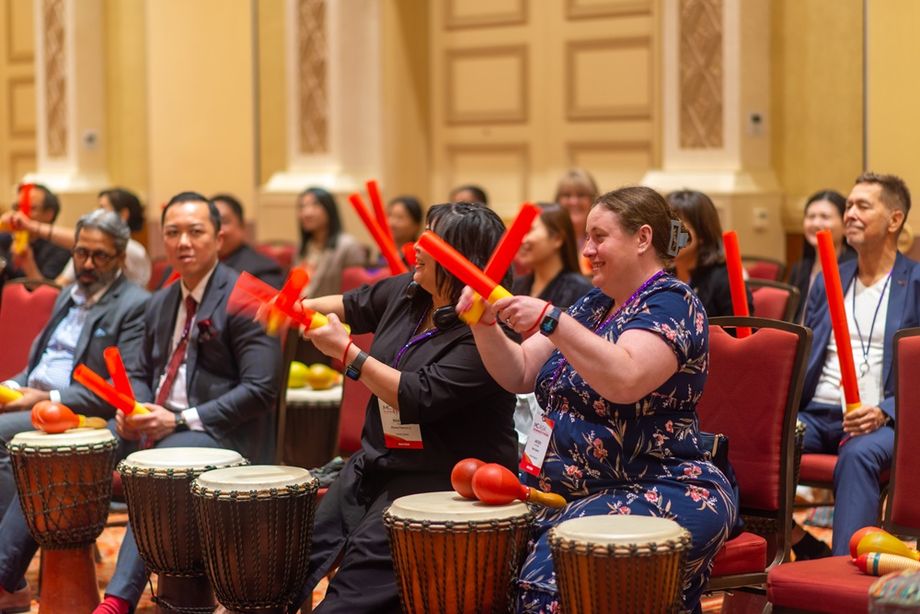
 Event planners are focusing on team-building activities for meetings and incentive trips. Photo Credit: Northstar Meetings Group
The APAC region is scaling up with intention when it comes to business events, adding people, frequency and dollars.
This is according to FCM’s inaugural Global Trends Report, developed with Cvent, which provides a detailed look at the major trends shaping the meetings and events industry today and in the years ahead. The report featured the views of M&E professionals across 28 countries and 22 industries, with the following key findings for the APAC region and beyond.
Global events on the rise
Global corporate events have grown year-on-year since 2022. Furthermore, in 2024, more than 28% of companies dedicated at least half of their travel and expense budgets to meetings, events and conferences, a strong signal of the sector’s recent resurgence.
Events are also getting bigger, with planners from Asia-Pacific spending more than other regions
In 2024, more than 47% of companies globally invested in medium to large-scale events, ranging from 50 to 150+ attendees, with Asia-Pacific taking the lead, with 47% of planners in the region putting their budget into bigger events. In the Americas, 42% of companies allocated budget toward larger events last year, while in Europe, the Middle East, and Africa, the figure was 35%.
Steady event investments
Among those with budget visibility, 43% reported plans to increase investment in events by 10% or more this year, while 39% expect spending to remain steady.
Regionally, Asia-Pacific will spend more in 2025, with 32% of planners stating this, compared to 28% in Europe, the Middle East, and Africa and 26% in the Americas.
Focus on team building
Globally, incentive travel planners are prioritising experiences that go beyond the destination. This means dining experiences, free time and relevant conference sessions.
Regional differences exist, though. In Asia-Pacific, planners often focus on team building, utilising shared experiences to reinforce connections. Those in Europe, the Middle East and Africa are more likely to include corporate social responsibility activities, aligning rewards with company values, while The Americas lean toward including business updates, using the opportunity to share company direction.
Measuring attendee experience
Of those surveyed, nearly a quarter (24%) identified pre- and post-event activation as a top priority when using digital tools, indicating a stronger emphasis on understanding attendee expectations before the event, as well as capturing insights for future events.
Attendee experience was cited as the number one priority when using digital tools by 28% of respondents, while budget management and event coordination came third (both chosen by 17%).
Event success: Destination, venue and food
When asked which factors contribute to event success, those planners in APAC ranked destination, venue and food first, followed by attendee experience and engagement and planning and outsourcing. The most important considerations in APAC event planning are: creating a memorable attendee experience, safety and security and strong project management.
Staying green
Avoiding single-use plastics was ranked as the top sustainability consideration by 65% of event professionals, with FCM saying this means more than ditching the bottled water and paper plates.
Planners are looking across the entire event experience, from pens and packaging to event furniture, decorations and communication methods. Venue choice also ranked highly for sustainability consideration. Businesses are actively choosing venues that align with their broader sustainability goals. The driver for this is that these venues can do some of the heavy lifting by bringing their own green initiatives to the table, without adding extra work for event teams.
Simone Seiler, global general manager, FCM Meetings & Events said: “This sector continues to innovate in response to evolving expectations around budgets, digital efficiencies, and time-pressured attendees, all while trying to keep pace with smart, sustainable practices that could redefine the landscape.”