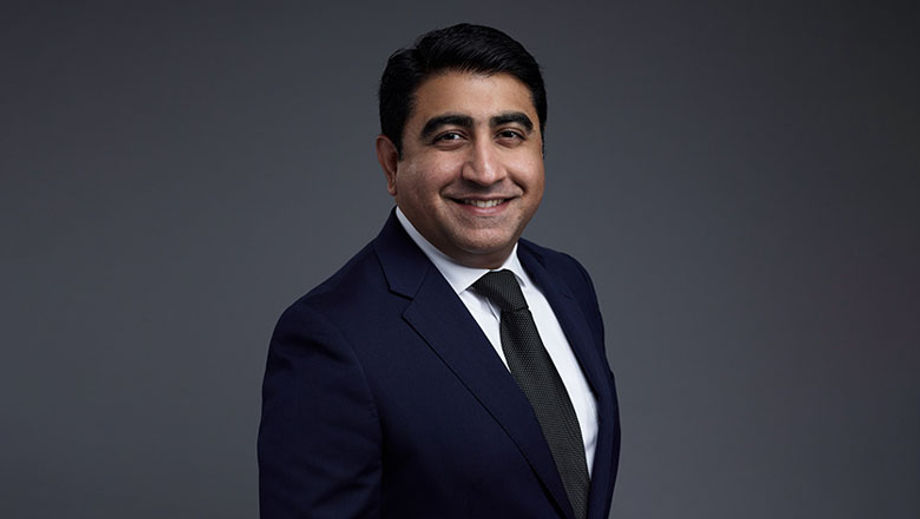
 Marriott International, says Ramesh Daryanani, vice president, global sales for Asia, is taking on "a leadership role in inspiring people to come back and meet." Photo Credit: Marriott International
As international borders reopen and as in-person events make a
comeback, Ramesh Daryanani, Marriott International’s vice president,
global sales for the Asia Pacific region, observes that MICE in the
endemic period is beginning to take shape in an altered, redefined form.
“We are seeing business bounce back differently,” Daryanani remarks,
during a recent conversation with Meetings and Conventions Asia. “It
varies by destination. In some cases, it varies based on what customers
or meeting planners are trying to achieve. “
In most Asian markets, domestic business is still driving much of the
demand in in-person meetings and events, but this is changing very
quickly.
[We're seeing] a much smaller meeting, but a longer duration. Where it used to be two nights or three nights, now, it's probably four or five nights.
Ramesh Daryanani, vice president, global sales, Asia Pacific, Marriott International
“People are still grappling with capacities at the moment to organise
regional and international meetings, so we're seeing a lot of meetings
still take place in-market,” he says. “As flight capacities increase,
people across the region and the world are coming together again.”
At the same time, Daryanani observes an uptick in the regularity, as
well as the duration, of in-person meetings but notes that attendance
size may see a reduction.
“Meetings are more frequent,” he says. “And where we would normally
see 200 to 300 people together, in some cases we’re noticing a core team
of about 50 to 70. So it's a much smaller meeting, but a longer
duration. Where it used to be two nights or three nights, now, it's
probably four or five nights.”
Purposeful meetings and events
The “next” normal
in meetings and events isn’t only characterised by length or audience
size, but also in terms of a meaningful purpose that the attendees can
derive from the event, a purpose that extends beyond the cold, hard
facts of a balance sheet.
Daryanani shares that meeting planners and organisers, propelled by
their clients’ evolving needs, are asking their venues for programmes
and activities related to sustainability or engagement with the local
culture or community. “Planners are now asking our people in various
destinations: what can we do to give back to the community? Or what can
we do from a sustainability standpoint?”
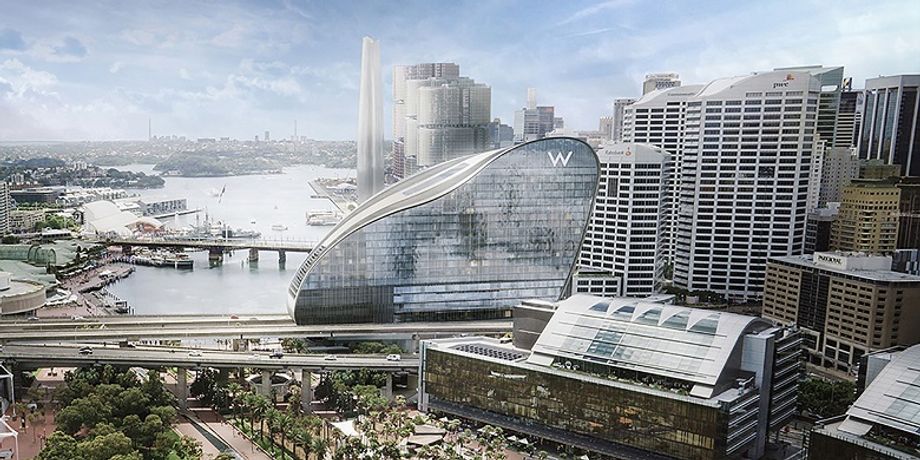 The 585-key W Sydney, with 1,300 sqm of events space, will be adjacent to Sydney's International Convention Centre (ICC). Photo Credit: Marriott International
With these in mind, the hotel group launched the Good Travel by
Marriott Bonvoy programme. The initiative gives meetings and events
guests the option to get involved in environmental protection, community
engagement or marine conservation, such as at a turtle rehabilitation
reserve with the JW Marriott in Phuket, for instance, while also serving
as a teambuilding activity.
“Our guests find this refreshing. They’re doing something with
purpose, for a good cause; at the same time, they're using this as an
opportunity to get their teams together, build that bonding, that
culture, and create a memorable meeting experience.”
Daryanani
thinks that ESG is increasingly becoming an imperative for the MICE
space. “As meeting planners plan for the future, they're going to look
at sustainability, diversity and inclusion components and whether the
partners that they choose to work with address these two things on a
serious level. It is going to be one of those considerations for sure,
as they choose a partner to work with.”
Looking ahead, Daryanani expresses optimism, citing exceptionally
strong performance in markets such as Australia and India with
properties reporting 90% occupancies, as well as high-profile events
such as the G20 Summit in Bali that will involve a cluster of the
group's properties.
But he remains cautious. “The signs are very encouraging. We’re
seeing a strong rebound for 2022. In saying that, it's probably going to
take another year for us to get back to 2019 levels.”