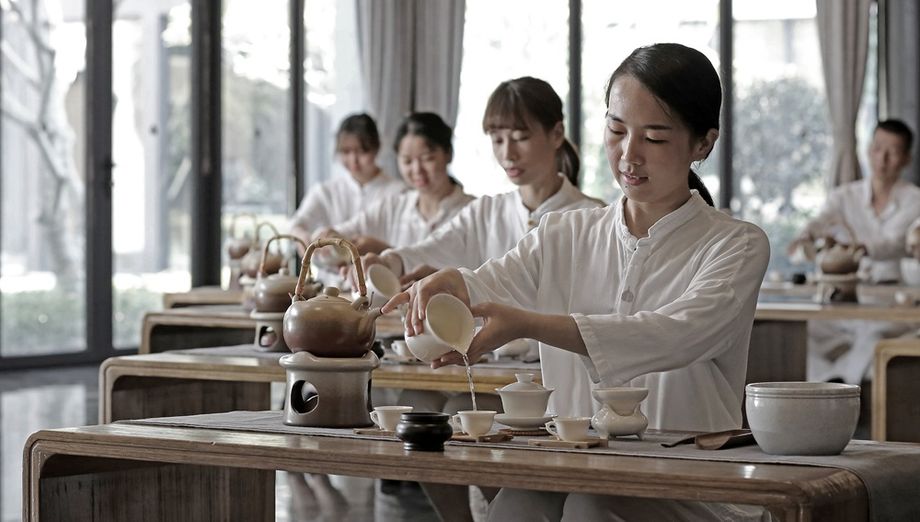
 Tea with traditional medicinal properties offer opportunities for a personalised and well-being focussed corporate proposition. Photo Credit: Elite Spring Villas
As hotels and retreat operators across Asia increasingly market traditional Chinese medicine (TCM) to corporates, the alternative wellness concept is being presented as structured wellbeing architecture that deliver transferable tools, well-being outcomes, and cultural resonance.
The demand
The shift is being driven by a more sophisticated corporate client. Rania Zheng, co-founder of Puyu, which operates TCM retreats across China, said: “Corporate travellers especially have become more intentional. They're not just looking for a nice break, they're looking for something that addresses the quiet depletion that accumulates in high-performance environments. That's where TCM has a lot to offer.”
Among the products that have landed with corporate clients is Shenzhen's Urban Meridian, a day immersion programme designed to attach directly to a business trip.
At Kamalaya Wellness Sanctuary on Koh Samui, GM and group director of wellness development Gopal Kumar sees demand evolving "from simple curiosity to a more informed appreciation of its practical and personalised applications, particularly in supporting sleep quality, emotional balance, resilience, and energy management”. For MICE planners, those outcomes have close relevance to employee well-being objectives.
Corporate-coded treatments
At Milaidhoo Maldives, resort manager Celine Pezel takes a structural approach: “We collaborate with recognised experts and experienced practitioners to ensure authenticity and credibility.”
A visiting modern TCM practitioner is returning for a second September residency following strong guest response. “Guests are increasingly curious to discover holistic wellness practices and are often tempted to try new techniques when guided by experienced practitioners,” Pezel noted.
Cordis Hong Kong routes groups through its Five Elements framework – interactive stations where delegates identify their element profile and receive a corresponding seasonal herbal tea – creating what the property describes as “a memorable blend of wellbeing, culture, and team connection”, said Kitty Tang, cluster DOSM.
Half-day TCM add-ons run from HK$400-650 per person, with demand strongest from US, Australian, and Singaporean groups of 50 to 150 participants.
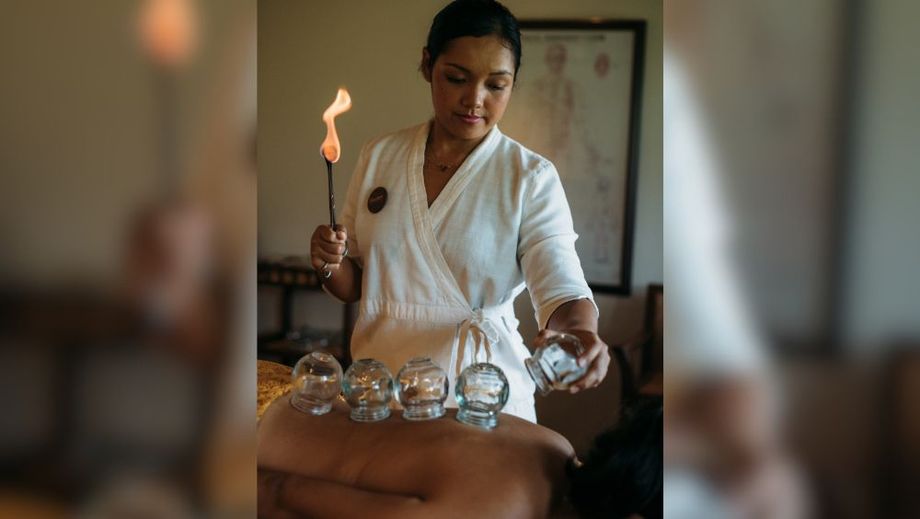 Observing positive responses to traditional Chinese spa treatments, Kamalaya Koh Samui is working on tailoring Traditional Chinese Medicine to become more accessible to corporates.
The accessibility factor
The practical challenge: how do you make an ancient diagnostic system work for 80 international delegates with a packed agenda?
Operators succeeding in this regard have built approachable entry points.
At RXV Wellness in Thailand, Piyarat Tanjaputkui, EVP in health and wellness, shared about a deliberately broad format built around Tai Chi, sound healing, breathing, and TCM-inspired nutrition.
“We take a much broader and more adaptable approach – especially for corporate and large group experiences,” she said. “Corporate and incentive groups are increasingly looking for meaningful wellness experiences that go beyond traditional meetings or retreats. They value programmes that support stress management, recovery, mental clarity, and long-term wellbeing.”
Kamalaya's Kumar similarly shared that the experience is “personalised and translated into practical lifestyle guidance, making TCM approachable regardless of guests' previous familiarity with the discipline.”
Personalisation opportunities
Take-home items are key parts of employee events. When it comes to TCM programmes, operators are confident in the value of healthy practices that executives take away.
Puyu's Zheng said: "The point is always transferability: you go home with a practice, not just a memory." Workshops in ear acupuncture and self-acupressure are designed specifically so delegates can apply them independently afterward.
Henfu Hotel Management GM Henry Zhu described a “one tea, one prescription” format where a TCM practitioner assesses each delegate's constitution to address fatigue and jet lag.
The half-day programme, which includes a Tieguanyin tea bath, guided seven bowls tea meditation, and tea moxibustion workshop, starts from approximately US$220 per person.
Making cultural context tangible
In Hong Kong, Clan & Co. founder Dennis Mak sees the city's herbal culture – botanical cocktails, medicinal snacks, herbal soups – as a corporate hospitality differentiator.
“Hong Kong has something most destinations don't: a deep, lived understanding of herbs that goes beyond wellness trends. That authenticity is what sets us apart.” The opportunity, he argues, is bridging heritage and modern taste.