 Photo Credit: GettyImages/Rawpixel
A recent SITE webinar, entitled Food and Beverage in the Near Future
and Beyond, examined the latest challenges and trends facing event
planners with regards to F&B.
Speakers observed an increased demand for alcohol-free options for
drinks, alongside more healthy dishes. “We need to stop having
sugar-laden sodas and think more about how we can use spritzers and
non-alcoholic beverages that have the same flavour as alcoholic drinks
such as bourbon,” noted Tracy Stuckrath, founder & chief connecting
officer at Thrive! Meetings & Events.
“These types of drinks however are not readily stocked at venues so
we need to incorporate them within menus and ensure venues are
accommodating those who may be avoiding alcohol or sugary drinks,” she
added,
Natalie Fulton, trade manager at Tourism New Zealand said she had
seen a greater emphasis on creativity and plant-based drinks that can
help stimulate the brain and said requests for afternoon tea-style food
were also on the increase.
“It’s great for Instagram, it is low-alcohol and there is a certain element of nostalgia attached,” she said.
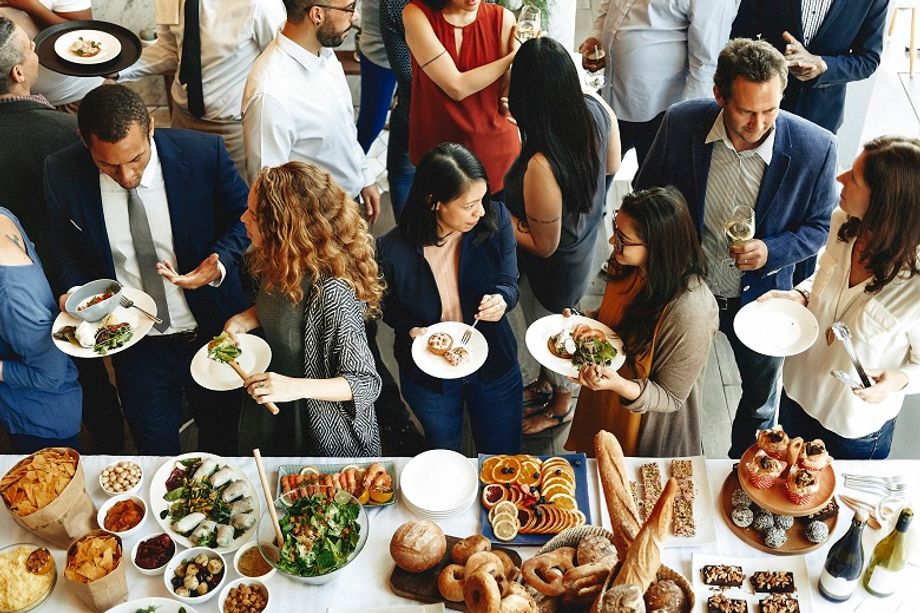
 Event planners are seeing a growing trend of delegates avoiding alcohol or sugary drinks at functions. Photo Credit: GettyImages/Rawpixel
Chef Andrew Roenbeck, who is also director of culinary operations at
The Boca Raton, concurred with the low-alcohol trend and added that
delegates are also keen to make their own versions of ‘trail mix’,
incorporating nuts and seeds, or blend their own smoothies, all of which
can help increase energy levels.
He pointed out that clients have become much more savvy food-wise in
the last two years, with a better understanding of what they want and
are increasingly aware of allergens and more healthy options.
Other trends identified included a growing interest in making food
the focus of an incentive experience. Fulton said that groups want to be
involved in making things and learning about local practices.
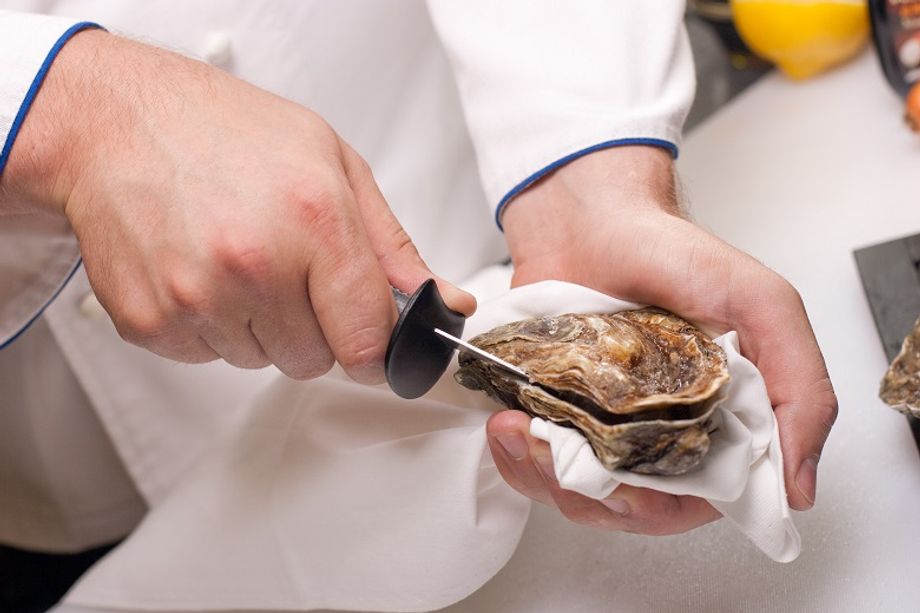 Delegates are becoming savvier and are seeking out experiences such as oyster shucking to gain a deeper appreciation of local destinations. Photo Credit: GettyImages/Maksud_kr
“In New Zealand, we are so blessed with the natural environment with
lots of [food-based] activities available, such as shucking oysters,
watching fishermen bring in crayfish and grilling it on the docks,” she
said. “You can really experience culture and destination at a deeper
level with food.”
Sustainability is another strong trend within F&B, with Roenbeck
stressing that using food from local suppliers as much as possible was
key. He acknowledged however that this would not be possible for every
destination and venue and urged planners to determine whether the
venue/destination could deliver on these requests.
Fulton put forth an idea to minimise food waste, highlighting how
some meetings are featuring more plant-based options and less proteins,
both of which are served family-style with smaller portions in the
middle of a table, a move away from large-scale buffets. Attendees can
also help themselves and choose either or both, having more control over
the portion size.
Anne Marie Rogers, director at Direct Travel Meetings said: “A few
years, preparing ‘special meals’ was seen as a hassle – now we have
creative chefs who see it as a challenge to come up with something
appealing and tasty.”
While participants agreed that the industry is moving in the right
direction with regards to sustainability, they noted that the Covid-19
pandemic had set sustainability progress back somewhat, with many
meetings serving individual portions to ensure health and safety.
The webinar also highlighted the benefits of upcycling food, where
food used in one dish can be repurposed for another the following day.