 Recent videos have surfaced in the US, showing attendees who refused to wear masks and booed when speakers reminded the audience on pandemic safety policies. Photo Credit: Getty Images/Pratchaya
The recent Conservative Political Action Conference (CPAC) held in Orlando, Florida has raised concerns about the challenges of enforcing safety protocols at in-person meetings, as videos surfaced of attendees refusing to wear masks. When speakers reminded those in the audience of the hotel's mask policy, they were met with boos and shouts of "freedom!"
"Your protocols are only as good as your willingness to enforce them," said Jacob Worek, director of operations for the Event Safety Alliance. "It is an organiser's duty of care to provide a safe environment for all attendees, and to mitigate all known risks. If you have a mandatory face-covering policy in place, you absolutely have the right to expect compliance and remove those who refuse to do so."
The sold-out event was held at the Hyatt Regency Orlando. Although Florida does not have a statewide mask mandate in place, an executive order from Orlando Mayor Jerry Demings requires everyone in the central Florida city to wear masks while in public places. The Hyatt Regency Orlando also requires that face coverings be worn in indoor public places and while moving around in outdoor areas.
According to a Hyatt spokesperson, CPAC guests were informed of the hotel's guidelines prior to the event and asked to sign a code of conduct during check-in. The code of conduct was developed with the event organisers and included specifics on the hotel's face-mask policy. Guests were also reminded of the safety protocols via in-room communication, signage and more. According to Hyatt, several CPAC attendees left the property as a result of noncompliance with the company's face-mask policy.
"Hyatt's face-covering policy notes that guests who do not wear face coverings in violation of the policy are asked to wear one. If they do not have one, face coverings are made available," said a spokesperson for the hotelier. "CPAC attendees who were not willing to comply with the policy were asked to leave the premises or given the option to remain in their guest room for the duration of their visit."
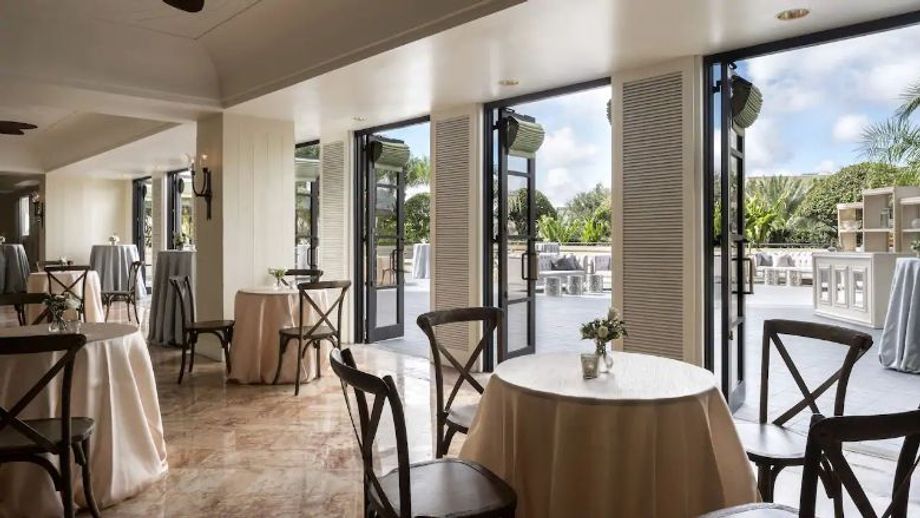 The sold-out Conservative Political Action Conference (CPAC) was held at the Hyatt Regency Orlando. The hotel had developed a code of conduct with the event organisers and included specifics its face-mask policy. Photo Credit: Hyatt Regency Orlando
Holding attendees accountable
The meetings industry has been devastated by the Covid-19 pandemic. But as planners get back to business in the new year, industry leaders stressed the importance of doing so responsibly by creating and enforcing a strict code of conduct.
"At the risk of sounding dramatic, nothing is more important," said Worek. "Conditions are improving, but we can't afford to let our guard down right as we near the finish line."
Increased vaccinations and declining Covid-19 cases have resulted in many states rolling back restrictions. Just last week, Texas and Mississippi announced that statewide mask mandates will be lifted and all businesses will be allowed to operate at 100% capacity.
"It's not unreasonable to assume that when masks are no longer required some folks will be more resistant to wearing them, especially in areas where there was already significant pushback," he said. "In my opinion, it's more important than ever for event professionals to hold the line and look out for their attendees' well-being, despite the mandates. Your house, your rules."
For attendees who refuse to comply with the code of conduct, Worek recommends taking a "three-strikes" approach. Strike one includes a verbal public reminder of the policy and why it is in place. Strike two is a warning that proceedings will end if compliance does not improve. If attendees still refuse to abide by safety policies, Worek says it is not unreasonable to shut down the event.
Communicating these policies to attendees prior to the event, as well as when they are on-site, is critical. Experts recommend creating a strict code of conduct and outlining what will happen if the rules are not followed.
"I think the hosting organisation has to make a decision at a leadership level — whether it's corporate, nonprofit or whatever it is — of what are they are putting in place to create a safe environment," said Liz Warwick, chair of the Event Industry's Council's Meeting and Event Design Workstream, which supports EIC’s Covid-19 Business Recovery Task Force. Warwick discussed how to create a code of conduct and ensure attendees follow Covid-19 safety guidelines during a recent episode of the Eventful podcast (listen here).
"The more you erode those protocols and allow exceptions, the more you're breaking down the integrity of the system," said Warwick. "So, I think the hosting organisation has to hold a firm line on 'This is what we're putting in place. If you want to attend the meeting, this is what you have to do and that's it. There are no exceptions.'"
The Events Industry Council has released a sample code of conduct document to help planners prepare for upcoming in-person events and communicate the safety protocols that attendees will be expected to abide by. The two-page document is designed to serve as a framework that can be adapted depending on an organisation's needs.
Michael Dominguez, president and CEO of Associated Luxury Hotels International, echoed the need for creating a code of conduct. He also stressed that safety protocols from the Centers for Disease Control and Prevention, such as wearing a mask and socially distancing, should be followed regardless of whether the attendees have been tested for Covid-19 or not.
"Even with testing there is still a need for mask and social distancing, specifically in the short term. Testing is a tool, but not a silver bullet in creating safe environments," said Dominguez. "Communicating a code of conduct prior to an event and at registration is critical to set the expectations of the attendee."
Don't discount meetings that run safely
Dominguez noted that despite the challenges CPAC organisers faced, there are numerous face-to-face meetings that have been held safely across the country since March 2020.
"There are hundreds of examples of meetings following these guidelines and doing it well," he said. "I hope our industry highlights those meetings as aggressively as those that fall short of expectations."
Northstar Meetings Group has been tracking state-by-state gathering restrictions, as well as case studies of where in-person events have been held safely and successfully.
Orlando, in particular, has been among the destinations leading the industry's recovery. The city's convention centre and local hotels have safely welcomed "more than 50 large group events since reopening, which is the greatest testament of trust," said Casandra Matej, president and CEO of Visit Orlando. She noted that safety is a top priority for the destination.
"Our local government leaders and destination partners have developed the strictest of safety measures and work closely with each group to educate them on how seriously our region takes safety, including our mandatory mask requirement, and that this commitment is a shared responsibility between our government, businesses, show clients and visitors. Additionally, as an added layer of security, Orange County's Business Compliance Team has an active schedule of unannounced visits to local businesses to ensure that every effort is being made to encourage and enforce compliance."
Source: Northstar Meetings Group