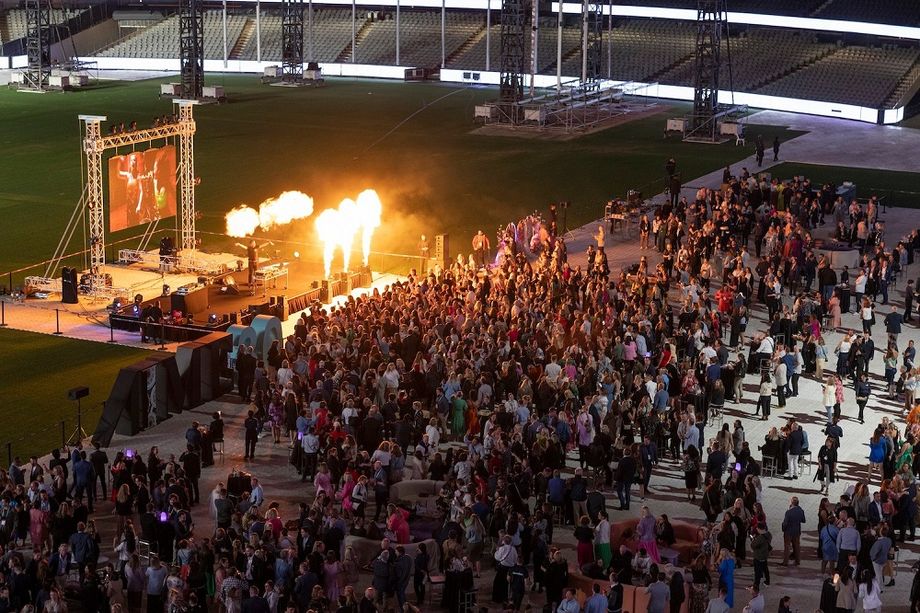
 The Marvel Stadium with a seating capacity of 30,000 was the site for AIME 2023 welcome party, and can hold banquets for 9,000 individuals. Photo Credit: AIME
Melbourne's world-class events offerings continue to grow, with an
estimated 9,000 hotel rooms expected to come on stream by 2024, doubling
the number of rooms since 30 years ago. Many of the new rooms will
belong to the ultra-luxury category, attracting incentive organisers.
Many are situated in the Central Business District (CBD) or along the
Southbank, stretching along the Yarra River from Melbourne proper to
the overflow city of Port Phillip, providing meeting and convention
planners with a dizzying array of options.
Melbourne's appeal to meeting organisers is not just limited to its
accommodation options. The city also boasts unique, heritage and
purpose-built meeting venues, a variety of incentives options, cultural
diversity, and a reputation as Australia's food and wine capital.
With sustainability now a non-negotiable factor in the events
industry, the CBD’s and Southbank’s walkability is a winning feature.
Some hotels on the Yarra riverside even offer water taxis to the
Melbourne Convention and Exhibition Centre (MCEC). Fun, convenient and
environmentally sound. Delegates can also take advantage of the city’s
tram network, which has two free hop-on-hop-off routes, covering many of
the central sites of importance.
The city’s popularity with Asian meeting and incentive groups is well
established. Melbourne is multi-cultural, welcoming and above all safe.
Julia Swanson, CEO of the Melbourne Convention Bureau, emphasises the
long-term importance of Asian corporate business to the city and sees
new opportunities on the horizon, “We have some significant groups
coming from India, so that's that's an important emerging market, and we
have increased services recently from Vietnam and also Melbourne to
Jakarta. Indonesia's a very significant neighbour of ours and something
of an economic powerhouse in the region.”
We have increased services recently from Vietnam and also Melbourne to Jakarta. Indonesia's a very significant neighbour of ours and something of an economic powerhouse in the region.
Julia Swanson, CEO, Melbourne Convention Bureau
Melbourne has long been popular with Asian super-incentives, some
totalling five figure groups, and the MCB is naturally enthusiastic
about China’s reopening.
"We have an office in China that we kept open throughout the pandemic
and maintained client relationships. We've had plenty of time to plan
and talk to them about different itineraries. When things start falling
into place with aviation, that's the last milestone we need to achieve
and then start welcoming those groups back," Swanson says.
Where to meet
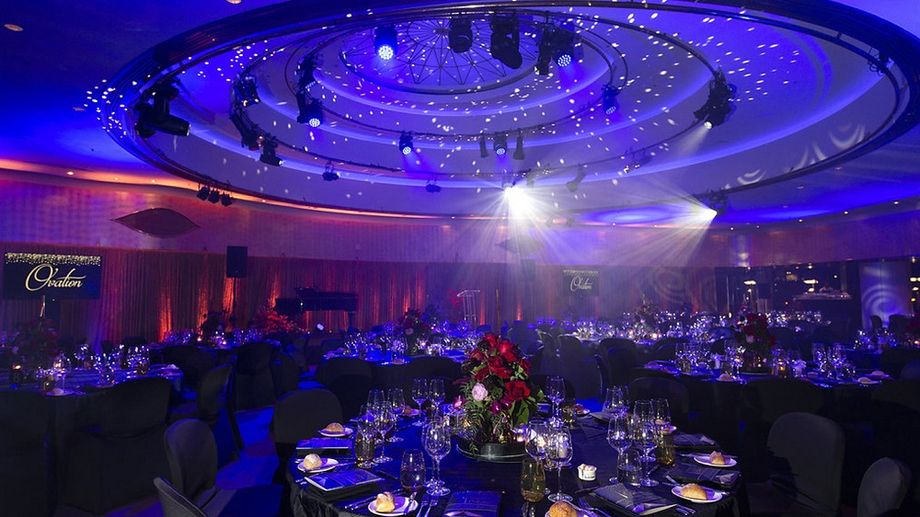 The Pavilion at Arts Centre Melbourne can hold up to 700 people for cocktails and 350 people in theatre-style. Photo Credit: Arts Centre Melbourne
Organisers are unquestionably spoilt for culturally rich venues. The
Arts Centre Melbourne is a culturally rich venue in Melbourne Arts
Precinct, offering a range of spaces and capacities with exquisitely
arranged pre-function areas, balconies and private rooms. Its largest
space, The Pavilion, has a domed ceiling, gold-leaf interior and a
wraparound balcony with views of the Yarra River and city skyline, which
can hold up to 700 for cocktails and 350 theatre-style.
From the aesthetic to the athletic, Melbourne covers it all.
Melbourne is known for its major sporting events such as the Melbourne
Cup, Australian Open and Australian Grand Prix. These events can be used
for high-end corporate hospitality and also provide unique venues for
hire out of season.
The 30,000-seat Marvel Stadium on the harbour’s edge for example,
which hosted the AIME 2023 welcome party can host banquets of up to
9,000 people, and has 15 indoor meeting spaces that can accommodate
smaller groups. The stadium's retractable roof can be closed or opened
in eight minutes, making it suitable for outdoor events. The stadium is
also set to undergo major renovations with a focus on events.
The
Melbourne Cricket Ground offers curated experiences, such as cocktails
or sit-down banquets in private suites and terraces, while the smaller
committee rooms are designed for smaller, more exclusive programmes.
Melbourne & Olympic Parks is home to the Australian Open and
aside from dining on centre court you can also practice your serve on
one of the show courts, while Flemington Racecourse even runs a
millinery workshop, where team-building participants can try their hand
at making hats and fascinators, essential female accessories for the
Melbourne Cup season.
When the MCB describes the city as ”Australia’s knowledge and
innovation capital”, it’s a reference to Melbourne’s portfolio of
globally renowned universities and research institutes. This certainly
helps position the city perfectly for the academic association sector.
However, it also provides corporate organisers with some spectacular and
fascinating venue options.
Centrally located on Collins Street, Monash University has a number
of spaces for small and medium-sized seminars, lecture presentations and
the like.
Bibliophiles and history buffs will love the State Library Victoria,
originally built in 1854 but redeveloped and refurbished to offer 10
unique event spaces.
What to do
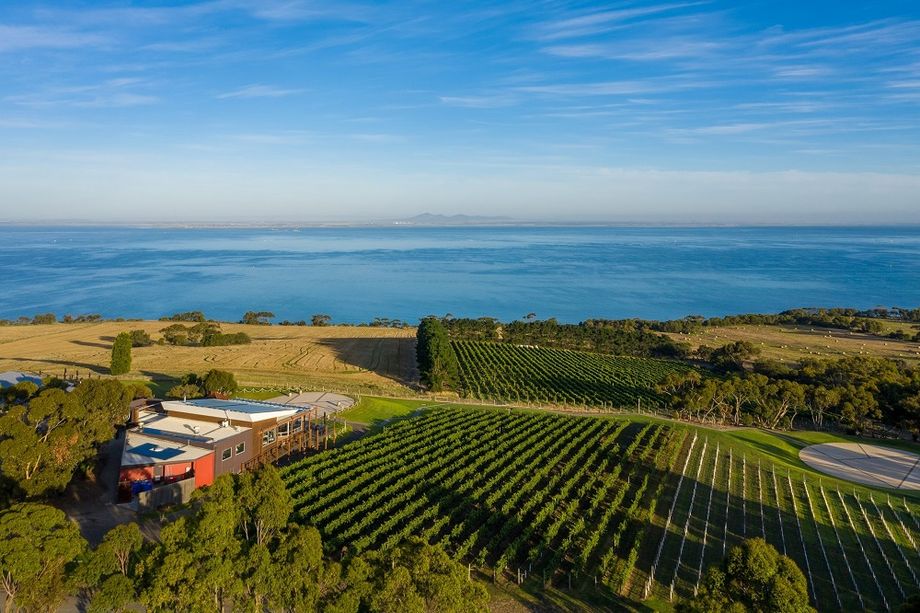 The Jack Rabbit Vineyard in Bellarine, Geelong, provides a short ferry and helicopter ride to central Melbourne, offering guidance on wine and food pairing. Photo Credit: Jack Rabbit Vineyard
There’s no shortage of things for them to do or see. Arts and culture
are embedded in Melbourne’s identity. The city overflows with galleries
and museums, providing different canvases for planners looking to
experiment creatively with their programme and event design.
For team-building, you can take a group for a street-art tour guided
by a Melbourne artist, winding through the city’s laneways, with
participants creating their own artwork to take home with them.
Melbourne also proudly boasts that per capita it outranks New York
for the number of cafes, bars and restaurants. The successive waves of
“new Australians” arriving in the city over the years brought with them
their own cuisines, coffee cultures and culinary traditions making
Melbourne a foodie paradise, whether casual dining in Flinders Lane or
along Southbank, or a full-scale sit-down banquet in a five-star hotel
ballroom.
For repeat visitors already familiar with the city itself, or for
those with extended programmes, Melbourne offers a staging post for
exploring regional Victoria. Here you can enjoy hot-air ballooning,
helicopter rides or stunning scenic travels along the Great Ocean Road.
Trips to local Victorian vineyards are a favourite for would-be wine
buffs or those who simply want to learn the basics of wine pairing, all
this in combination with fine dining at locally centred farm-to-fork
restaurants.
The Jack Rabbit Vineyard in Bellarine, Geelong, for example is a
short ferry ride from Port Phillip terminal to Portalington Pier, and an
even shorter helicopter ride back to central Melbourne. In between, the
chefs and sommeliers will offer guidance for your tastebuds on which
grape variety best matches your courses.
There’s something for treasure hunters too. Much of Melbourne’s early
economy was based on the 1850s Gold Rush and a themed trip to Sovereign
Hill allows groups to travel back in time to pan for real gold, tour a
gold mine underground, meet and take selfies with historical characters
in costumes as well as see skilled goldsmiths at work.
However, the real treasure is Melbourne itself. It’s city that refuses to stand still and continually pushes to reinvent itself.