.jpg?tr=w-920%2Cfo-auto "From Māori-led programming to youth-led declarations, New Zealand's conferences are shaped by values as much as venues.") From Māori-led programming to youth-led declarations, New Zealand's conferences are shaped by values as much as venues. Photo Credit: Tourism New Zealand
From Māori-led programming to youth-led declarations, New Zealand's conferences are shaped by values as much as venues. Photo Credit: Tourism New Zealand
From Māori-led programming to youth-led declarations, New Zealand's conferences are shaped by values as much as venues. In M&C Asia’s latest cover story on legacy in business events, Penelope Ryan, Tourism New Zealand Global Manager Business Events, explains how the country deliberately deliberately engineers long-term legacy – from research partnerships to indigenous youth leadership – across every event it hosts.
New Zealand is known for linking business events with its knowledge economy – how does this create long-term legacy? Why is this approach particularly relevant in today?
The legacies of business events extend far beyond tourism. Tourism New Zealand’s Business Events team deliberately aligns bid activity with sectors such as business, science, innovation, sustainability, education, health and advanced technologies to maximise the impact for New Zealand.
By bringing global experts together with local researchers, industry and Māori, business events accelerate knowledge sharing, attract talent and investment, and leave behind strengthened capability, networks and international partnerships that endure well beyond the event itself.
This approach is particularly relevant in today’s global environment, where economies face shared challenges such as climate change, technological disruption and geopolitical uncertainty.
“Conferences held in New Zealand don’t just share knowledge – they are grounded in the values that shape how we collaborate, innovate and care for one another.”
Penelope Ryan, Tourism New Zealand Global Manager Business Events

How do you measure “knowledge legacy”, which can be less tangible than environmental impact?
At the bid stage we work closely with our bid champions on the objectives they would like to achieve from their event and look at ways of positioning and developing the conference and themes in ways that can meet these.
We have produced Conference Impact Aotearoa – an easy-to-follow impact and legacy framework for event organisers to help create positive benefits for both the association and the host community. This includes planning advice on how to plan, measure and promote your legacy initiatives and impacts, including aligning your objectives with the United Nations SDGs and other local frameworks.
We’re also supporting the The Conference Legacy Project, a partnership between ChristchurchNZ and Tourism New Zealand. Research led by Professor Carmel Foley of UTS Business School, based on delegate surveys from conferences across multiple cities, is giving us credible, evidence-based insights into long-term impact of conferences in Aotearoa New Zealand.
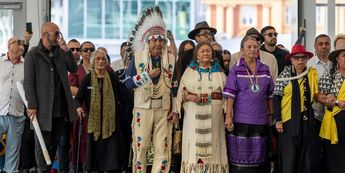
Photo Credit:Tamaira Hook
WIPCE, the World Indigenous Peoples’ Conference on Education in Auckland in 2025 brought Indigenous knowledge keepers from around the globe to share strategies for culturally grounded education.
The presentation of the Declaration of the Indigenous Youth ensures that rangatahi (youth) voices formally shape ongoing WIPCE discourse.
By embedding youth leadership within programme and governance spaces, WIPCE 2025 reinforced intergenerational continuity as a defining principle of the global Indigenous education movement.
What opportunities exist for planners to tap into New Zealand's knowledge networks?
New Zealand’s small population and interconnectedness, in combination with our strategic bidding process and legacy framework, means our academics, thought leaders and decision makers are integrated into the conference process as bid champions, speakers and attendees. It also opens opportunities and access for experiential learning, through site visits and hands-on activities in areas from earth science to agribusiness.
Māori cultural leadership is a defining factor in New Zealand’s conference legacy. Based on our Conference Legacy Project research, nearly 88% of delegates say Māori-led programming creates transformative experiences. We’ve created a toolkit, Incorporating Māori Culture into your Conference, which offers advice on how to do this respectfully and authentically.
**This story is part of M&C Asia’s April–June 2026 cover story exploring **how business events across Asia Pacific are creating lasting legacy and impact**. Click here to read more from **this issue.