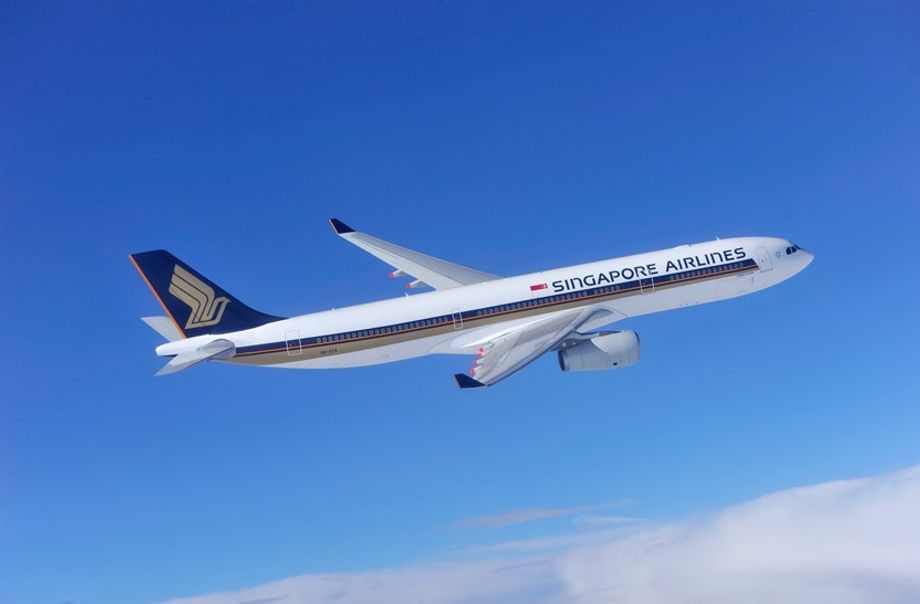
 Singapore Airlines: aiming to achieve net zero carbon emissions by 2050.
Singapore Airlines (SIA) and Scoot, the two airlines within the SIA
Group portfolio of carriers, will be replacing 5% of their total fuel
requirements with sustainable aviation fuels (SAF) by 2030.
Sustainable fuels are a key decarbonisation goal for the airline
industry, given their potential to reduce carbon emissions by up to 80%
on a life-cycle basis compared to conventional jet fuel. This makes them
critical to the Group’s goal of achieving net zero carbon emissions by
2050.
Goh Choon Phong, CEO, Singapore Airlines, said: “This is an important
milestone in the SIA Group’s sustainability journey. The greater use of
sustainable fuels will be a key lever in our decarbonisation strategy,
which includes our continued investment in new generation aircraft and
greater operational efficiencies. Together, this will put us on the path
towards our net zero target.”
The airline seeks deeper collaboration with partners and
stakeholders, both in Singapore and around the world, to meet the
industry’s collective sustainability targets. “We will continue to find
opportunities to work together to support the greater production and use
of sustainable fuels in the airline industry, as well as other
decarbonisation initiatives,” said Goh.
Discussions with fuel suppliers on opportunities to purchase
sustainable aviation fuels are ongoing, and further details will be
announced at the appropriate time.
Considerations to understand
Over the last few years, the Group has been trying to better
understand the operational and commercial considerations that would
support the greater supply and adoption of SAF. The Group also supports
the International Air Transport Association (IATA) and other
stakeholders in their efforts to agree on the core principles of various
SAF accounting methods. This will increase trust amongst stakeholders
that the emission reductions from using SAF can be reliably tracked,
traced, and accounted for.
SIA’s spokesperson said: “Collaboration with governments, as well as
partners in the aviation ecosystem, such as aircraft manufacturers,
technology providers, and fuel suppliers, is essential to accelerate the
development, deployment, and commercialisation of SAF in Singapore.”
“As part of developing our sustainability journey roadmap, we are
reviewing multiple options and pathways towards setting interim
emissions reduction targets and will communicate these plans when they
have been firmed up.”
SIA’s journey
In 2017 – partnering with Civil Aviation Authority of Singapore
(CAAS), SIA operated 12 green package flights from San Francisco to
Singapore that incorporated the use of SAF, fuel-efficient aircraft.
In 2020 - SIA entered a year-long partnership with Swedish airport
operator, Swedavia, to deploy a blend of jet fuel and SAF through the
airport’s fuel hydrant system on SIA flights between Stockholm and
Moscow. This partnership improved the Group’s understanding of the
logistics and procurement of renewable fuels.
In September 2023 - SIA, CAAS, and GenZero1 concluded a 20-month SAF
pilot whereby 1,000 tonnes of neat SAF were imported, blended in
Singapore, and uplifted via Changi Airport’s fuel hydrant system on SIA
and Scoot flights.
An equivalent 1,000 SAF credits were generated through a trusted
industry standard, the Roundtable on Sustainable Biomaterials (RSB) Book
& Claim System2. This was about 2,500 tonnes of carbon dioxide
reductions. The credits were offered to corporates and freight
forwarders to reduce their carbon footprint.
The pilot reaffirmed Singapore’s operational readiness for
sustainable fuels, and affirmed that transactions in SAF credits can be
conducted in a trusted and transparent manner. SIA is sharing its
learnings with industry partners to raise awareness and support for SAF
among corporates, build the credibility of the Book & Claim system,
and encourage efforts to scale up the adoption of SAF.