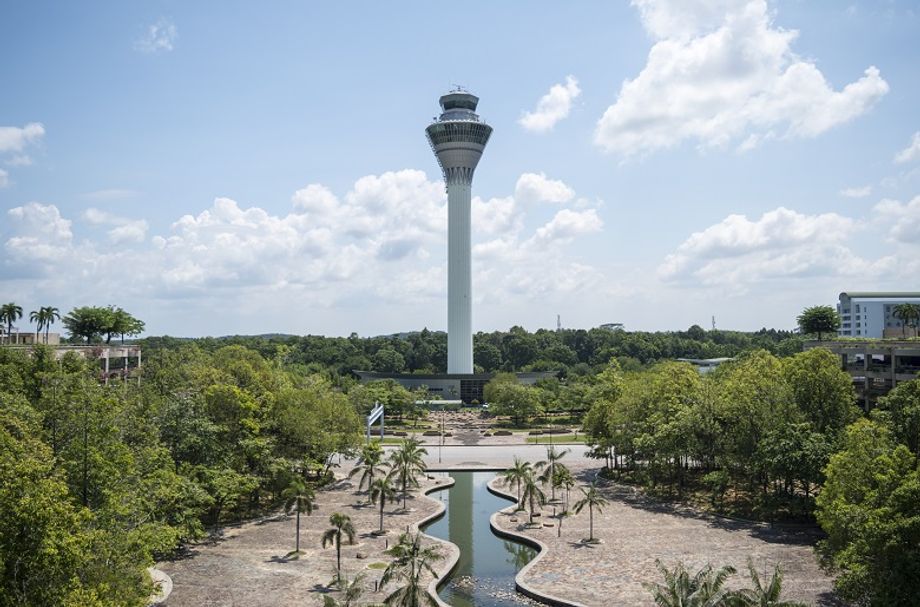
 The airport can tailor the biometric-enabled systems according to their requirements. Photo Credit: Ahmad Yamani Fadzlin / Shutterstock
Malaysia’s Kuala Lumpur International Airport (KLIA) has gone high
tech and low touch, deploying Swiss information technology company SITA
for a technology overhaul which includes installing more than 100
biometric-enabled Smart Path kiosks, a Smart Path Bag Drop, and an IT
infrastructure refresh.
Just like Frankfurt Airport, these SITA self-service kiosks were put
into operations in December last year to streamline the check-in
process. The kiosks come equipped with common-use API-based services
that will allow passengers to check-in quickly and obtain bag tags for
later self-bag drop services.
Additionally,
the kiosks can be customised to suit the requirements of specific
passenger needs and the airport’s brand design. The award-winning
modular design allows further enhancements and modifications to be made
in the future without the need of replacing the entire kiosk, adding
cost efficiency and sustainability benefits.
KLIA has also migrated to Windows 10 and upgraded its CORE servers,
network equipment, and Baggage Reconciliation System to speed up secure
data communications.
The technology overhaul is being executed under a project to
transition KLIA from Airport 3.0 to Airport 4.0. This transition aims to
adopt a fully integrated digital ecosystem that uses business
intelligence and the collection of data to provide a seamless passenger
journey.
Beyond elevating the passenger experience, the Airport 4.0 project
will also focus on optimising terminal use, enhancing operational
efficiency and increasing revenue.
“We are delighted to partner again with Malaysia Airports and support
the airport in its recovery from Covid-19. Ensuring fluid passenger
experiences while balancing operational efficiency is a high priority
for airports globally,” Sumesh Patel, SITA’s Asia Pacific president
said.
“With this deployment, we've delivered on both elements,
future-proofing the airport for a touchless journey via enhanced
biometric capability while also driving down operational costs and
increasing the resilience and agility of IT infrastructure,” he added.
Source: Travel Weekly Asia