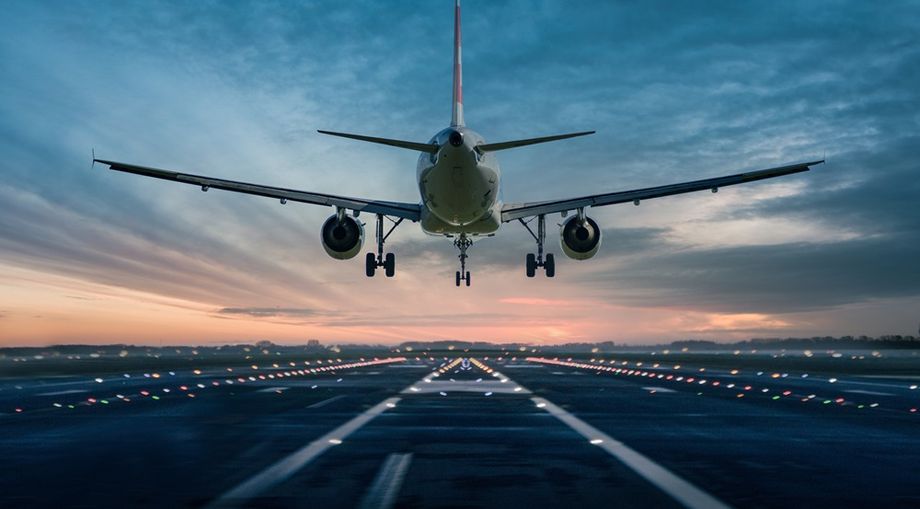
 Domestic air capacity in China has moved into growth compared to the 2019 period, but international capacity still lags. Photo Credit: Adobe Stock/m.mphoto
The aviation markets in China, Japan and South Korea are still
recovering from the effects of Covid-19, with the pandemic having a
lasting effect on outbound travel from China in particular.
These were some of the findings from a recent webinar from travel data provider OAG. Titled North East Asia: Growth and Recovery,
it focused on how some of the biggest and busiest aviation markets in
the world such as China, Japan and South Korea are performing as peak
season approaches.
OAG data showed that capacity in Northeast Asia for domestic and
international level is now above 2019 levels and for the year to date,
capacity is up by 4.9% compared to the same period in 2019, and up by
13% on the same period in 2023. Capacity is expected to continue in line
with this trend for the rest of the summer.
Looking at the other major Northeast Asian markets in more detail,
and specifically at domestic capacity, only China has made a recovery
and moved into growth compared to the 2019 period. OAG said Japan’s
domestic capacity is lingering below 2019 levels, with South Korea
remaining further behind.
Across Northeast Asian countries, international capacity has still to
reach above 2019 levels in any of the main markets. Data showed that
China and Hong Kong remain furthest behind, down by 28-29%, whilst Japan
and South Korea are just 8% below.
Deirdre Fulton, partner at Midas Aviation, said this was a region
that had not fully recovered from the pandemic, with challenging
economic conditions in China also playing a part.
High-speed train services are very efficient, and they tick all the environmental boxes compared to the airlines; and yet Chinese airlines domestically are charging the same fares as a high-speed train service.
John Grant, chief analyst, OAG
The growth of high-speed train services is also having an impact on
aviation markets, according to John Grant, chief analyst at OAG.
“High-speed train services are very efficient, and they tick all the
environmental boxes compared to the airlines; and yet Chinese airlines
domestically are charging the same fares as a high-speed train service,”
he said. “That is just madness. An airline has a much higher cost base
per flight and has to charge much higher fares. How can we have so much
air capacity competing with high-speed train services with the same fare
- this will damage Chinese aviation.”
Grant said the outlook would also have a knock-on effect on other
industries, such as hotels. “Consider all those in Asia that have become
reliant on [travel from] China,” he said. “How do places like Thailand
fill all those hotel rooms, waiting for [outbound] Chinese travellers
and the pre-2019 volume to return. How do they refocus their market to
where there is going to be more demand? Places like Thailand are still
holding their breath for Chinese international travellers to return.”
Gary Bowerman, director of travel intelligence and marketing firm
Check-in Asia questioned whether destinations like Thailand have had
their day with regards to Chinese travellers, suggesting that many
Chinese travellers may opt for the Middle East while destinations within
Northeast Asia remain popular.
“Thailand is still working very very hard to draw back Chinese
travellers but the key phrase used by most destinations in Southeast
Asia at the moment is market diversification,” said Bowerman. “They know
they were too reliant on China, they need to attract more travellers
from different markets and that is what they are trying to do.”
Bowerman shared that Southeast Asia has optimism toward India being the next big market,
but Fulton added that India still has very low levels of income despite
having the biggest population in the world – which means that air
travel remains unaffordable for many.
Participants also discussed Saudi Arabia’s attractiveness to Chinese
travellers, with its six- to seven-star hotels seen to be a big draw for
the market. However, they also wondered if this might lead to creating
too much capacity too quickly and result in an eventual bursting of the
bubble.