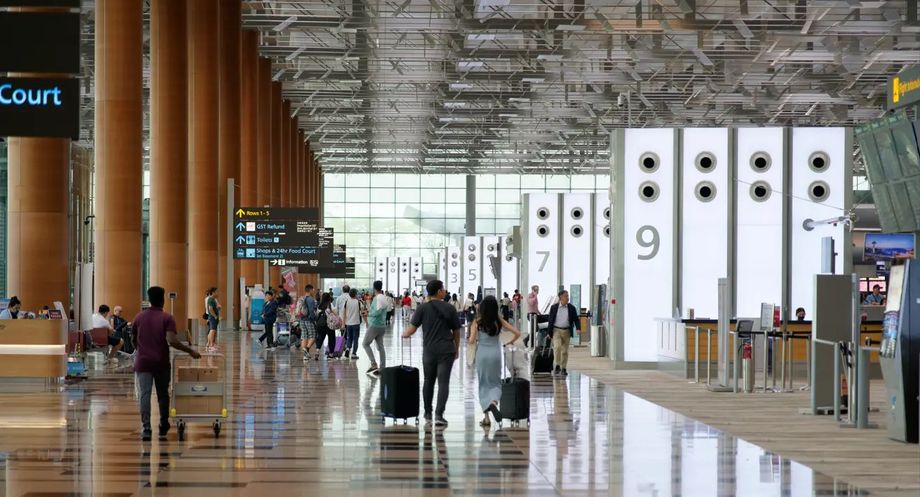
 The significant investment in Singapore Changi Airport Terminals 1 to 4 are made to ensure the airport stays competitive and meets rising demand for air travel within the APAC region, ahead of the opening of Terminal 5. Photo Credit: Changi Airport Group
Changi Airport Group (CAG) has announced a significant investment in Singapore Changi Airport Terminals 1 to 4, to ensure it stays competitive and meets rising demand for air travel within the APAC region, ahead of the opening of Terminal 5.
Both the International Air Transport Association and Airports Council International have projected global passenger volumes to at least double between 2023 and 2043, with Asia-Pacific recording the fastest rise, and contributing to more than half of this growth.
Air travel demand in the region is therefore expected to grow strongly over the next few decades, and Changi Airport says it is well-poised to serve this rise in demand, provide better connectivity to travellers and support Singapore’s position as a global air hub.
Over the next six years, a total of S$3billion (US$2.5 billion) will be spent to improve services such as baggage handling, check-in, immigration and Skytrain connections between terminals, as well as to replace end-of-life systems to facilitate smoother passenger and airline experiences.
The existing Skytrain’s signalling and communications equipment will be upgraded, while new cars will also be added to provide additional passenger capacity. Changi Airport will also upgrade its Terminal 3 baggage handling system to enhance capacity, energy efficiency and resilience. The upgrade includes a revamp of its early bag storage subsystem that will boost capacity by 65%.
A new rooftop inter-terminal baggage conveyance system connecting Terminal 1 to Terminal 3 will also be constructed, creating a second pathway for passenger baggage to be transferred between the two terminals.
A new check-in row is also being built at Terminal 4’s departure level, featuring self-service check-in kiosks and automated bag drops. CAG says the new facilities will increase the terminal’s check-in capacity by about 15% and allow it to accommodate up to 2,500 passengers per hour. Terminal 1’s arrival immigration halls capacity will also be expanded by almost 60%, relieving bottlenecks, and a refurbishment of Terminal 3 is also in the works.
To fund the required investment, airport charges will be progressively raised between 2025 and 2030; CAG says this will also cater for higher operating costs such as manpower and energy. To help airlines with the transition, a 50% rebate on increases in landing, parking and aerobridge (LPA) charges will be given to airlines for the first six months.
Based on current ticket prices, the increase in passenger fees is estimated to be about 1% or less for an economy class ticket on most flights departing from or connecting through Singapore.