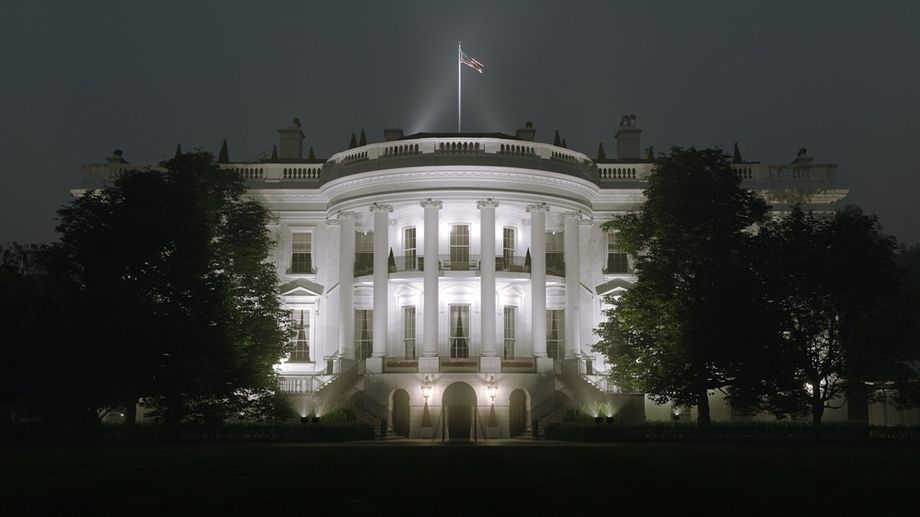
 The White House at dusk. Photo Credit: AdobeStock/assetseller
President of the US Donald Trump’s ballroom has ignited controversy not simply because it is big, expensive or divisive. For the meetings and conventions trade, the fiasco is a reminder that a venue’s scale only makes sense when its purpose, security logic and public narrative line up.
The ballroom controversy
The ballroom has been called 'ugly’, ‘an eyesore’ and ‘a gold-plated monstrosity’. But the controversy begins with place. Reported accounts say the ballroom would replace the White House’s historic East Wing, raising objections from preservationists and critics who see the project as an irreversible alteration to one of the most symbolically loaded buildings in the US.
Reuters reported that the National Trust for Historic Preservation sued after the administration tore down the East Wing and began building a 90,000-square-foot ballroom without specific congressional approval, while Chief Justice John Roberts called the project “likely unlawful” in dissent as the Supreme Court allowed construction to continue during litigation.
The second controversy is cost. Early public descriptions put the project at roughly US$200 million, but subsequent reports placed the price closer to US$300 million and then US$400 million. The Hill reported that Trump said the ballroom was “under budget” and that he had doubled its size, while also noting Republican discussions of up to US$1 billion for associated security upgrades.
The third controversy is narrative. Is this a long-needed official events venue, a donor-funded legacy project, a security modernisation, or a presidential vanity build?
The security shell
It is easy to see high-security venues as a direct response to the makeshift use of tents or off-site venues for official events.
Military Times, citing Reuters, said Trump described a “bunker-like” ballroom with a hardened roof, titanium fencing “so strong that a bulldozer cannot knock it over”, four-inch-thick special glass, “impenetrable steel”, a roof designed as a drone base, and a six-storey subterranean complex that would include a military hospital and research facilities. Trump reportedly said the roof would be “built for military” and have “massive drone capacity”.
In the private meetings market, hardened perimeters, screening pavilions, secure arrivals, and protective glass are familiar at one end of the spectrum. Drone ports, blast-resistant roofs, underground medical facilities, and military research spaces are not.
But can a blast-proof exterior sniff out and keep out covert attackers, or prevent en-route hits? Snipes are the mode, not the motive. Any security that matters involves surveillance and intelligence that transcend the meeting or conference venue – whether bunker or ballroom. And this logic is familiar to private venues that have been investing in protocols over physical structures.
Size and machismo
While it feels moot to speculate the true purpose of a bunker-ballroom, what seems explicit is the China connection. Trump has publicly called the ballroom he's building the “Great Hall of the United States”, and suggested it could rival China's Great Hall of the People.
On not one but two state occasions, solemn diplomacy somehow gave way to ballroom one-upping. After returning from a state visit to Beijing, where he was hosted at China's Great Hall of the People, the US President said on social media: “China has a Ballroom, and so should the U.S.A.!” More recently, during a dinner to celebrate US-China relations, Trump went “off script”, in his own words, to toot the ballroom horn and invite guests to preview the ballroom.
The comparisons collapse the bunker-ballroom discussion into a geopolitical reflex and chest-beating. A pageant of size and machismo.
According to The Hill, when challenged on the ballroom’s size, Trump replied: “I doubled the size of it, you dumb person. You are not a smart person.” It was a bruising exchange, but it captured the project’s operating logic: bigger is better, and not necessarily due to the conventional considerations of venue capacity – not even venue security.
The takeaway for the meetings and conventions trade is not that scale is bad. The lesson is that scale needs a use case, a governance case, and a communications case. If those three do not align, even the most secure grand ballroom in the world can become the least controlled room in politics.