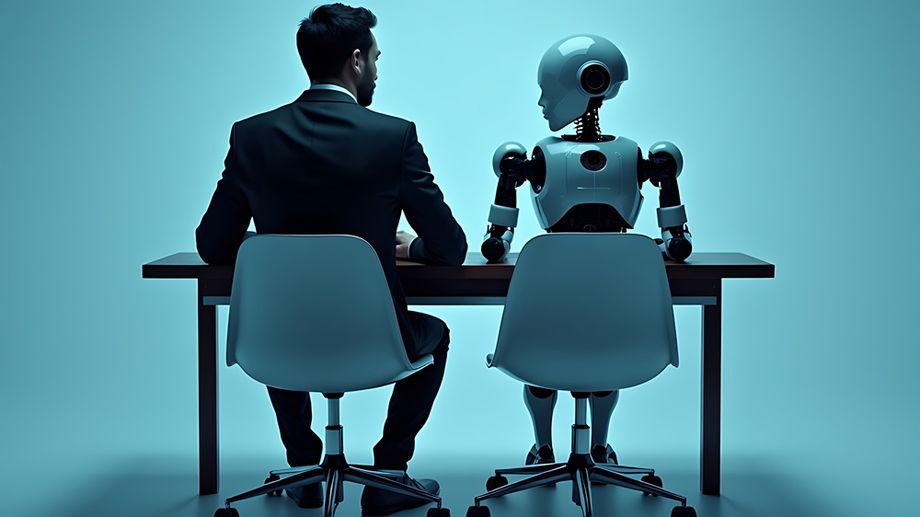
 Companies are looking at new roles, but also new services that previously belonged on wish lists. Photo Credit: AdobeStock/Din Nasahrudin
As AI adoption hastens across the global workforce, technology experts at the Singapore MICE Forum 2026 discuss the job creation and elevation opportunities that the disruptive force could bring.
The landscape for MICE deployment
Mohan Belani, CEO and co-founder, e27, said that AI adoption across Singapore’s MICE industry is uneven, with larger companies ahead of the curve because they have greater resources, dedicated teams and stronger data infrastructure to implement AI strategically. e27 is a tech startup platform that supports the Southeast Asian tech ecosystem with events, connecting entrepreneurs with investors, corporate partners, and talent.
Smaller companies have strong interest but are adopting AI more slowly, with employees often experimenting with tools such as ChatGPT or Claude without the infrastructure or strategy to generate significant business outcomes. Belani warned that this could widen the gap between larger and smaller players, a trend also emerging across other industries in the region.
The right talent
Nevertheless, in the grand scheme of things, jobs will evolve. Su-Ren Neo, group head of marketing & director, Asia Pacific, LinkedIn, said that AI is changing work at the task level, and with it, the skills required across roles. Some 70% of the skills required for a role could change by 2030, making continuous upskilling increasingly important.
At the same time, human capabilities such as curiosity, courage, creativity, empathy and judgement are becoming more valuable as AI skills become more widespread.
Neo stressed that talent, trust and leadership are inseparable in an AI-driven transformation. Hence, organisations need to invest in developing talent, build trust by bringing employees along on the transformation journey, and ensure leaders provide direction and alignment.
New, better-paying roles?
AI is shifting job roles towards higher-value work while creating new jobs, according to Zachary Wang, co-founder, Level3AI, whose company helps enterprises scale their customer support and sales teams with AI agents to match human performance.
With AI increasingly taking over structured and repetitive tasks traditionally handled by frontline customer service agents, new roles are emerging, such as agent operations, to manage AI agents.
Traditional customer service managers who once focused on managing human agents are increasingly overseeing AI agents: monitoring their performance, analysing customer dissatisfaction and escalations, and identifying whether problems stem from the knowledge base, company policies or operating playbooks.
This shifts customer service work from handling tickets to improving policies, processes and knowledge management across the organisation.
“That's when the work really starts,” he said, adding that these higher-leverage roles can also command better pay.
The limits of ‘one-person unicorns’
While AI can dramatically increase the capabilities of individuals and small businesses, the idea of a “one-person company” is less convincing in larger and more complex organisations, said Neo.
AI can help individuals with research, preparation, drafting and other tasks, allowing small teams to achieve more, but in a regional marketing role, success requires human judgement to interpret customer insights, assess cultural differences and determine what will resonate across diverse markets.
Marketing also sits at the intersection of sales, customer success and product development, requiring people to synthesise different perspectives, align teams and drive broader business strategy.
Beyond roles
More than the evolution of jobs and roles, AI is also allowing companies to provide services they previously could not offer, including 24-hour, seven-day and multilingual customer support, Level3AI’s Wong shared.
The shift, he said, is “not so much about what AI is doing what people used to do. A lot of our clients are looking at what they wish they could do, but couldn't do yesterday”.