 Returns on Relationships are easy to prioritise but difficult to track. Photo Credit: iStock/Deagreez
There used to be just one metric event planners were judged against – Return on Investment (ROI). Two more R's have since entered the post event wrap meeting: Return on Experience (ROE) and Return on Relationship (ROR).
3 R’s and a Why
This shift reflects a deeper transformation in how events create value beyond commercial, and how the three Rs can serve as a success metric between client and planner; event and attendee.
“ROI exists because organisations want accountability, and that makes sense,” said Dwirt J Ang, deputy director, commercials at PMG Asia Pacific, a Singapore-based integrated marketing agency that works with technology clients including Google, Dell and players in health-tech.
It is not spreadsheets but relationships that keep clients loyal, he continued. “Sometimes ROI is just the front. What clients really care about is continuity, consistency, reliability, relationships. Between us and them, and between them and their customers.”
Focusing purely on financial return misses the deeper purpose of events. Event professionals are not selling products or services, but confidence.
“So, in that first meeting, instead of asking what the event needs to deliver, we start by asking the client why the event needs to exist. And that answer shapes everything – the design, the narrative, the experience and the outcomes.”
From there, planners can start looking at ROE and ROR. While ROR principally refers to the relationship between attendee and brand, it can also relate to the relationship between client and agency.
Instead of asking what the event needs to deliver, we start by asking why the event needs to exist. That answer shapes everything – the design, the narrative, the experience and the outcomes.
Dwirt J Ang, deputy director, commercials, PMG Asia Pacific
Approaching ROR in stages
PMG Asia Pacific describes a clear evolution in its client relationships:
Beggar stage – seeking opportunities and pitching for work
Cashier stage – transactional projects and one-off jobs
Consultant stage – clients seek advice and strategic input
Advisor stage – long-term strategic partnerships
“The ultimate goal is the advisor level,” explained Ang. “Where clients come to you and say: ‘We have a full year of objectives. How should we model our campaigns and events against them?’ That’s a relationship, not a transaction.”
This is where ROR becomes the most valuable currency.
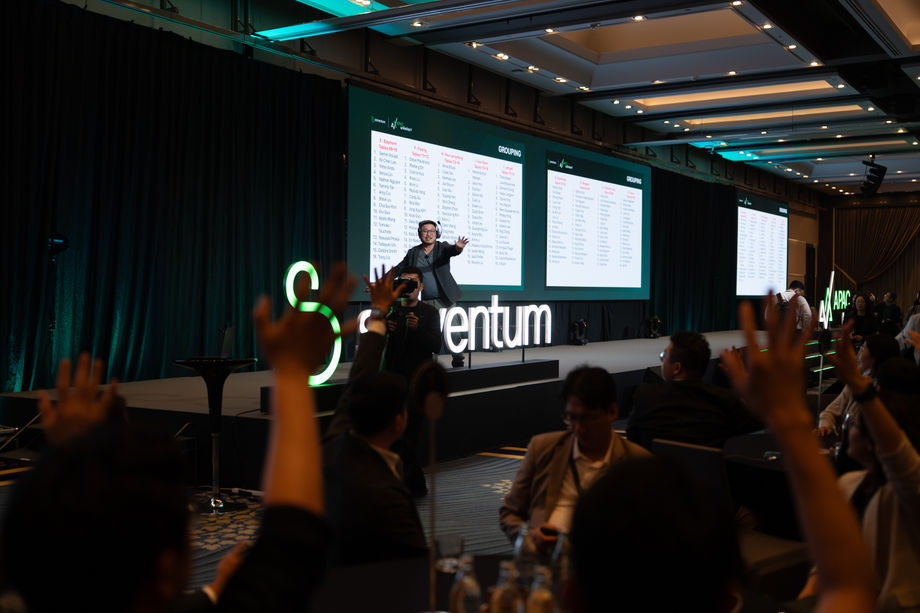 ROI is sometimes just a front for choosing planners who better grasp the logic of relationships: Dwirt J Ang, deputy director, commercials at PMG Asia Pacific
Brand-attendee ROR
When it comes to attendee engagement, ROR goes beyond lead generation to entail partnerships, referrals, trust, repeat engagement, and long-term loyalty.
“In a world where digital channels are noisy, events are one of the last remaining spaces for genuine human connection and in-person experiences carry more weight than ever. People are bombarded by PR, ads, content, social media, but face-to-face interaction builds something deeper. Trust doesn’t scale digitally the same way connection does physically,” said Shah Nair, PMG Asia Pacific’s regional creative strategist.
ROI and ROE become by-products of ROR, Nair added. “If people trust you, ROI follows. Through trust, experience quality improves naturally.”
Case in point: Google and Dell
For Ang and Nair, relationship-building isn’t abstract - it’s operational.
They cited a recent consumer activation for Google Pixel, where the main KPI was simple: getting people to interact with the new Pixel 10.
Beyond clocking footfall, PMG Asia Pacific reframed the activation around engagement, storytelling and interaction. Their goal was to get the product into people’s hands and they tracked:
Meaningful engagement
Product interaction
Social traction (with Google Ambassadors)
Post-event sales uplift
Brand buzz (via public interactions)
Repeat activation opportunities
“The result we wanted was also about building a relationship between each person and Google that piqued interest and nudged further investigation and purchase,” Nair said. At the same time, it built trust between the planner and Google, which opened up discussions about planning future Google campaigns across multiple regions.
In the B2B space, their long-term partnership with Dell through the Dell Technologies Forum demonstrates the same principle.
Partners come back to that event year after year not solely for the experience, but because the relationships are strong. “Networking, partnerships, shared value – the forum has become a community, a festival even – so much more than just an annual event,” Nair explained.
In a world where digital channels are noisy, events are one of the last remaining spaces for genuine human connection… Trust doesn’t scale digitally the same way connection does physically.
Shah Nair, regional creative strategist, PMG Asia Pacific
Measuring the non-transactional
How can event planners go about measuring ROR?
“It isn’t easy,” said Nair. “Most organisations track activity, not behaviour. CRM systems like Salesforce can show responsiveness and engagement, but real relationship tracking is complex.”
What they see emerging instead is blended measurement:
Some organisations are evolving faster than others, particularly tech brands and enterprise clients with strong data ecosystems. But Ang and Nair were clear: “Not everything valuable is immediately measurable. Relationship value compounds over time. But that’s also the point, right? To develop a long-term relationship between our clients and their customers.”
Can one have it all?
So, now for the big question: can one event deliver all three R's?
“Yes, but not equally,” said Nair. “It’s a sliding scale. There’s no perfect formula. But when done well, the three R's reinforce each other. ROE and ROR naturally go hand in hand. Great experiences build relationships. Strong relationships increase ROI.”
From the creative side, the team’s philosophy is simple: “If there’s room for narrative, story, and meaning, you can achieve all three R's in one event. If it’s just transactional, you’ll only ever optimise for ROI.”
ROI keeps the lights on, ROE builds memory, and ROR builds longevity, summarised Nair and Ang, who will both be attending The Meetings Show Asia Pacific 2026.
And in an industry driven by trust, loyalty, and human connection, that may be the most valuable return of all.